Inventory & Warehouse
Build a Food Inventory App with Glide
A Food Inventory app built on Glide helps restaurants, caterers, and food service operations track ingredient stock, manage expiration dates, and reduce waste — all from a phone that works in the kitchen environment. GlideApps Agency builds food inventory systems for operations where freshness, cost control, and health code compliance depend on accurate, real-time tracking.
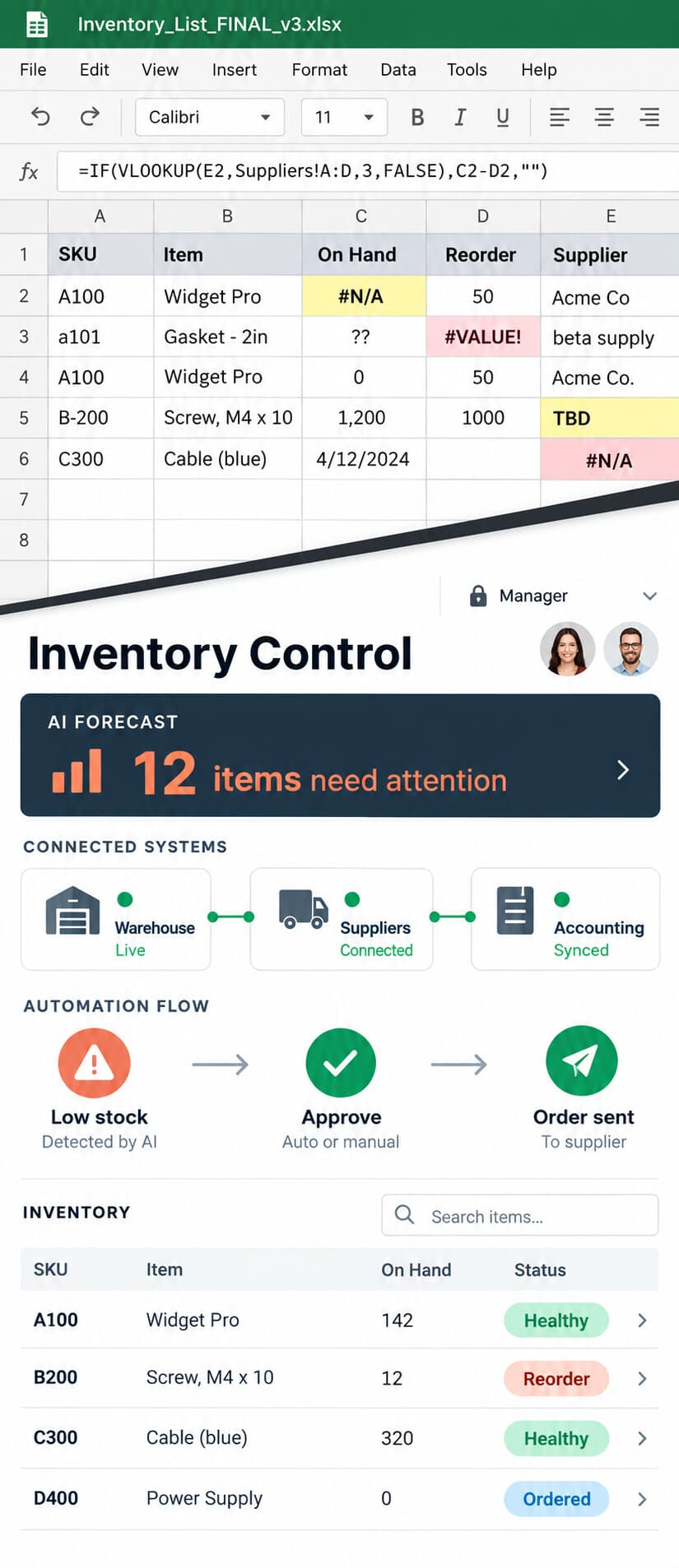
GlideApps Agency builds production-ready Food Inventory apps for enterprises and growth-stage companies — 350+ Glide apps delivered since 2019, with deep expertise in inventory & warehouse. Projects start at $15,000 with typical delivery in 4–8 weeks.
What does building a Food Inventory app include?
Every engagement includes discovery, data architecture, UI/UX design, development, QA, and post-launch support — not just a build-and-handoff.
Discovery & Architecture
Requirements mapping, data modeling, integration planning, and platform-fit assessment before a single screen is built.
UI/UX Design
Wireframes and interactive prototypes designed for your users — not generic templates. Optimized for mobile and desktop.
Development & QA
Built by certified Glide experts with enterprise experience. Rigorous testing across devices, roles, and data volumes.
Launch & Support
User training, documentation, and ongoing maintenance. We don't disappear after deployment.
Key features of your Food Inventory app
FIFO & Expiration Date Tracking
Track every food item by receipt date and expiration date with FIFO enforcement alerts, ensuring older stock is used first and nothing expired stays in rotation.
Recipe-Based Inventory Deduction
Link menu items to ingredient recipes so selling a dish automatically deducts the correct quantities of each ingredient, keeping stock levels accurate without manual counting.
Waste Logging & Analysis
Log food waste by item, reason (spoilage, overproduction, trimming), and quantity to identify patterns and reduce waste percentage — a direct impact on food cost margins.
Vendor Order Integration
Generate purchase orders to food suppliers based on par levels, upcoming menu needs, and current stock — streamlining the daily ordering process that kitchen managers handle before service.
Who uses a Food Inventory app?
How much does a Food Inventory app cost?
Projects start at $15,000 for internal business apps. Most clients invest $40,000–$80,000 annually across development, iteration, and support.
| Project Type | Timeline | Starting At |
|---|---|---|
| Internal Business App | 4–6 weeks | $15,000 |
| Client-Facing Portal | 4–6 weeks | $20,000 |
| Enterprise Platform | 6–8 weeks | $40,000 |
| Multi-App Architecture | 8–12 weeks | $50,000+ |
The Glide Sprint Process
How we build your Food Inventory app
Discovery
Requirements, data modeling, and platform-fit assessment. We define scope before writing a line of logic.
Architecture
Data structure, security model, integration map, and user roles. The blueprint that prevents rework.
Build
Iterative development with weekly demos. You see progress, not just status updates.
QA & Launch
Cross-device testing, user acceptance, and production deployment with rollback safety.
Support
Ongoing maintenance, feature iterations, and scaling support. We don't disappear after launch.
Frequently asked questions about Food Inventory apps
Can the app track food costs as a percentage of revenue?+
Does the app work in a busy kitchen environment?+
Can we manage inventory across multiple restaurant locations?+
How does the app handle items received by weight?+
Can the app help with health department inspections?+
Related apps you might need
Inventory Management App
Inventory & Warehouse
Stock Management App
Inventory & Warehouse
Warehouse Management App
Inventory & Warehouse
Inventory Tracking App
Inventory & Warehouse
Barcode Inventory App
Inventory & Warehouse
Explore all our Inventory & Warehouse apps built with Glide.
“Their responsiveness to our needs was exceptional.”
Jerry Hernandez — Executive Director, Integrated Community
Ready to build your Food Inventory app?
Schedule a consultation with our Senior Partners. We'll scope your project, recommend the right approach, and deliver in 4–8 weeks.