Operations & Field Service
Build a Service Request App with Glide
A Glide service request app gives your customers and internal users a clean, simple way to submit service needs and gives your team the structured queue, routing logic, and tracking tools needed to deliver fast, consistent service at scale. GlideApps Agency builds service request management systems for IT teams, facilities departments, customer service operations, and any function that handles high volumes of inbound requests that need to be triaged, assigned, and resolved efficiently. We've helped teams go from email chaos to organized service operations in under 6 weeks.
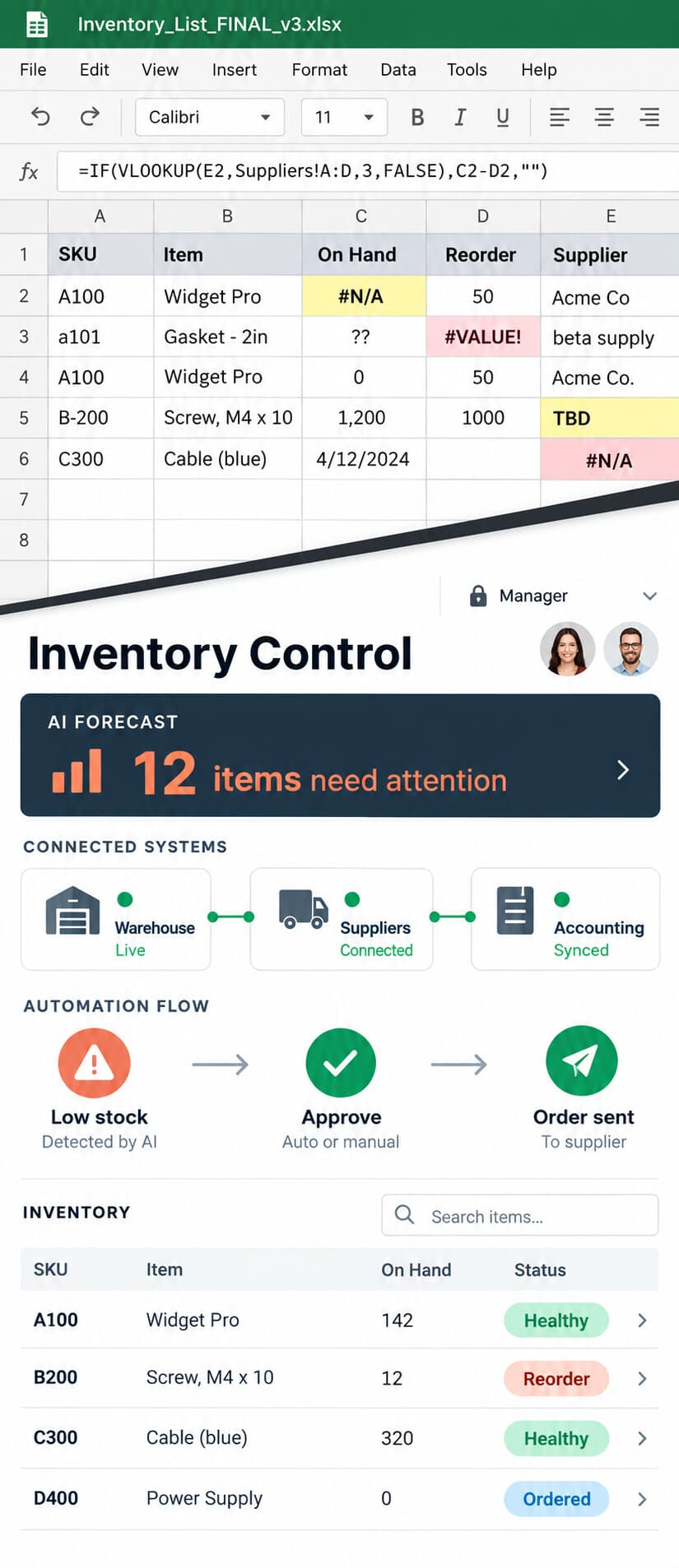
GlideApps Agency builds production-ready Service Request apps for enterprises and growth-stage companies — 350+ Glide apps delivered since 2019, with deep expertise in operations & field service. Projects start at $15,000 with typical delivery in 4–8 weeks.
What does building a Service Request app include?
Every engagement includes discovery, data architecture, UI/UX design, development, QA, and post-launch support — not just a build-and-handoff.
Discovery & Architecture
Requirements mapping, data modeling, integration planning, and platform-fit assessment before a single screen is built.
UI/UX Design
Wireframes and interactive prototypes designed for your users — not generic templates. Optimized for mobile and desktop.
Development & QA
Built by certified Glide experts with enterprise experience. Rigorous testing across devices, roles, and data volumes.
Launch & Support
User training, documentation, and ongoing maintenance. We don't disappear after deployment.
Key features of your Service Request app
Branded Service Request Portal
Give requestors a clean, branded intake form accessible by link or QR code that captures the information your team needs to act without requiring extensive follow-up for clarification.
Automatic Triage & Routing
Route incoming requests to the right team or individual based on request type, urgency, and requesting department. Routing rules are configured by admins and update without code changes.
SLA Monitoring & Breach Alerts
Set response and resolution SLAs by request type and receive automated alerts when open requests approach their deadlines. Managers see SLA health at a glance on the operations dashboard.
Full Request History & Audit Trail
Every request, status change, communication, and resolution note is logged with user and timestamp, creating a complete audit trail for compliance, quality review, and dispute resolution.
Who uses a Service Request app?
How much does a Service Request app cost?
Projects start at $15,000 for internal business apps. Most clients invest $40,000–$80,000 annually across development, iteration, and support.
| Project Type | Timeline | Starting At |
|---|---|---|
| Internal Business App | 4–6 weeks | $15,000 |
| Client-Facing Portal | 4–6 weeks | $20,000 |
| Enterprise Platform | 6–8 weeks | $40,000 |
| Multi-App Architecture | 8–12 weeks | $50,000+ |
The Glide Sprint Process
How we build your Service Request app
Discovery
Requirements, data modeling, and platform-fit assessment. We define scope before writing a line of logic.
Architecture
Data structure, security model, integration map, and user roles. The blueprint that prevents rework.
Build
Iterative development with weekly demos. You see progress, not just status updates.
QA & Launch
Cross-device testing, user acceptance, and production deployment with rollback safety.
Support
Ongoing maintenance, feature iterations, and scaling support. We don't disappear after launch.
Frequently asked questions about Service Request apps
Can requestors check the status of their open requests without contacting the service team?+
How do we handle requests that come in outside of business hours?+
Can we collect feedback on service quality after a request is resolved?+
Can the app integrate with existing ticketing systems like ServiceNow or Zendesk?+
Is a per-submission pricing model available for high-volume service teams?+
Related apps you might need
Field Service App
Operations & Field Service
Work Order App
Operations & Field Service
Dispatch App
Operations & Field Service
Job Scheduling App
Operations & Field Service
Technician Scheduling App
Operations & Field Service
Explore all our Operations & Field Service apps built with Glide.
“They are one of the few experts in Glide.”
Paola Quiles — CEO, Balanceada
Ready to build your Service Request app?
Schedule a consultation with our Senior Partners. We'll scope your project, recommend the right approach, and deliver in 4–8 weeks.