Logistics & Transportation
Build a Load Planning App with Glide
A Glide-built Load Planning app gives operations teams, dispatchers, and warehouse staff a structured digital system to build loads, assign trailers, verify weight and cube compliance, and sequence shipments for multi-stop delivery — replacing the whiteboards and spreadsheets that break under volume. GlideApps Agency builds load planning apps for distributors and 3PLs, starting at $15,000.
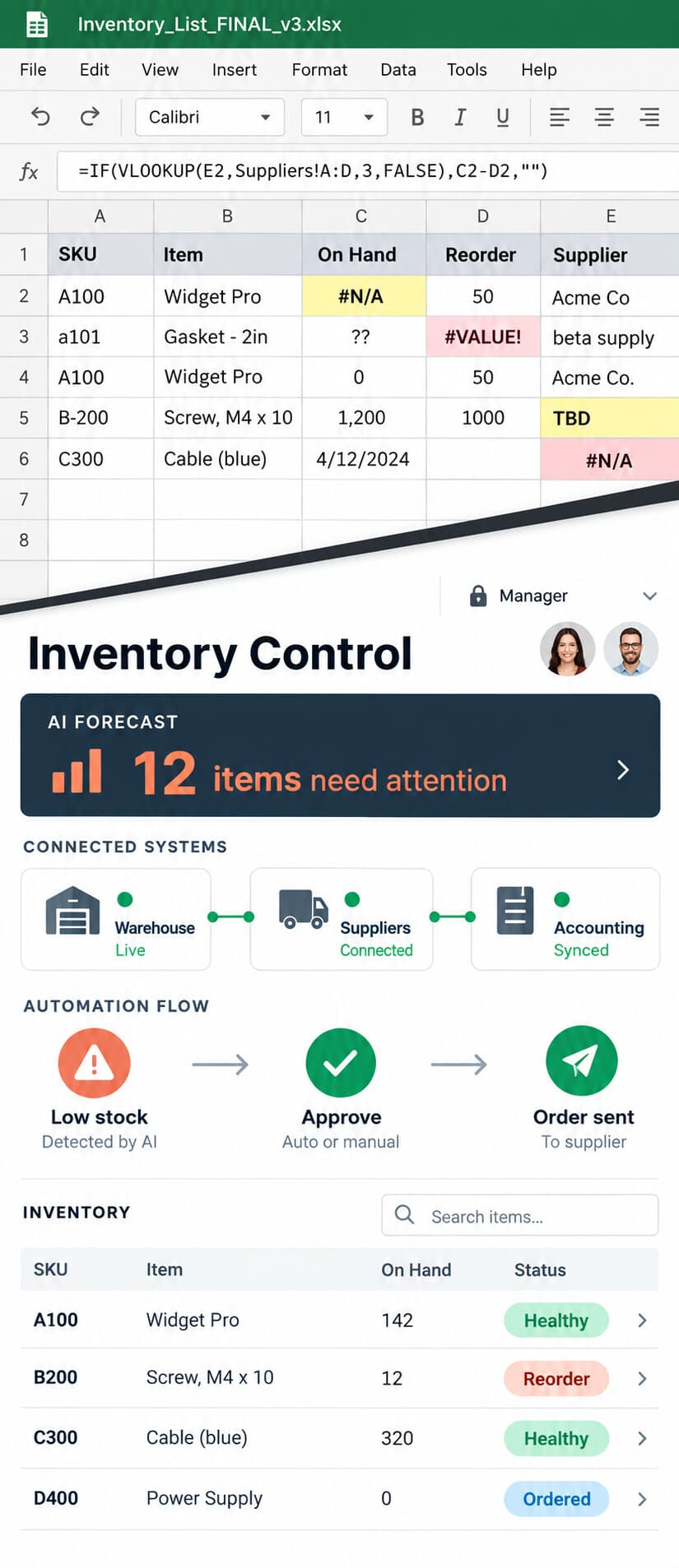
GlideApps Agency builds production-ready Load Planning apps for enterprises and growth-stage companies — 350+ Glide apps delivered since 2019, with deep expertise in logistics & transportation. Projects start at $15,000 with typical delivery in 4–8 weeks.
What does building a Load Planning app include?
Every engagement includes discovery, data architecture, UI/UX design, development, QA, and post-launch support — not just a build-and-handoff.
Discovery & Architecture
Requirements mapping, data modeling, integration planning, and platform-fit assessment before a single screen is built.
UI/UX Design
Wireframes and interactive prototypes designed for your users — not generic templates. Optimized for mobile and desktop.
Development & QA
Built by certified Glide experts with enterprise experience. Rigorous testing across devices, roles, and data volumes.
Launch & Support
User training, documentation, and ongoing maintenance. We don't disappear after deployment.
Key features of your Load Planning app
Load Build & Shipment Assignment
Assign shipments to loads based on delivery region, weight, cube, and equipment type. Visualize load capacity utilization and prevent overloads before trailer assignment.
Weight & Cube Compliance
Track weight and cube per load against legal limits and trailer capacity. Flag overweight or over-dimensional loads before dispatch to prevent DOT compliance violations.
Trailer Assignment & Yard Management
Assign loads to specific trailers in the yard. Track trailer positions, seal numbers, and load completion status from staging through departure.
Multi-Stop Load Sequencing
Sequence stops within each multi-drop load for unloading efficiency. Ensure freight is loaded in reverse delivery sequence to minimize driver unloading time at each stop.
Who uses a Load Planning app?
How much does a Load Planning app cost?
Projects start at $15,000 for internal business apps. Most clients invest $40,000–$80,000 annually across development, iteration, and support.
| Project Type | Timeline | Starting At |
|---|---|---|
| Internal Business App | 4–6 weeks | $15,000 |
| Client-Facing Portal | 4–6 weeks | $20,000 |
| Enterprise Platform | 6–8 weeks | $40,000 |
| Multi-App Architecture | 8–12 weeks | $50,000+ |
The Glide Sprint Process
How we build your Load Planning app
Discovery
Requirements, data modeling, and platform-fit assessment. We define scope before writing a line of logic.
Architecture
Data structure, security model, integration map, and user roles. The blueprint that prevents rework.
Build
Iterative development with weekly demos. You see progress, not just status updates.
QA & Launch
Cross-device testing, user acceptance, and production deployment with rollback safety.
Support
Ongoing maintenance, feature iterations, and scaling support. We don't disappear after launch.
Frequently asked questions about Load Planning apps
Can the app integrate with our WMS or OMS?+
How does the app handle temperature-controlled loads?+
Can the app calculate freight class and NMFC compliance?+
Can drivers access load details from the mobile app?+
Can the app support drop-and-hook operations?+
Related apps you might need
Logistics Management App
Logistics & Transportation
Fleet Management App
Logistics & Transportation
Driver Management App
Logistics & Transportation
Trucking Management App
Logistics & Transportation
Freight Management App
Logistics & Transportation
Explore all our Logistics & Transportation apps built with Glide.
“They've been professional throughout the development and delivered great results in an incredible turnaround time.”
Matt Wilson — VP, Insurance Brokerage
Ready to build your Load Planning app?
Schedule a consultation with our Senior Partners. We'll scope your project, recommend the right approach, and deliver in 4–8 weeks.