Logistics & Transportation
Build a Transport Scheduling App with Glide
A Glide-built Transport Scheduling app gives logistics coordinators, dispatchers, and operations managers a structured platform to plan transport capacity, assign loads to carriers, manage driver schedules, and track departure and arrival compliance — replacing the manual coordination that drives up costs and delays. GlideApps Agency builds transport scheduling apps for shippers, 3PLs, and carriers, starting at $15,000.
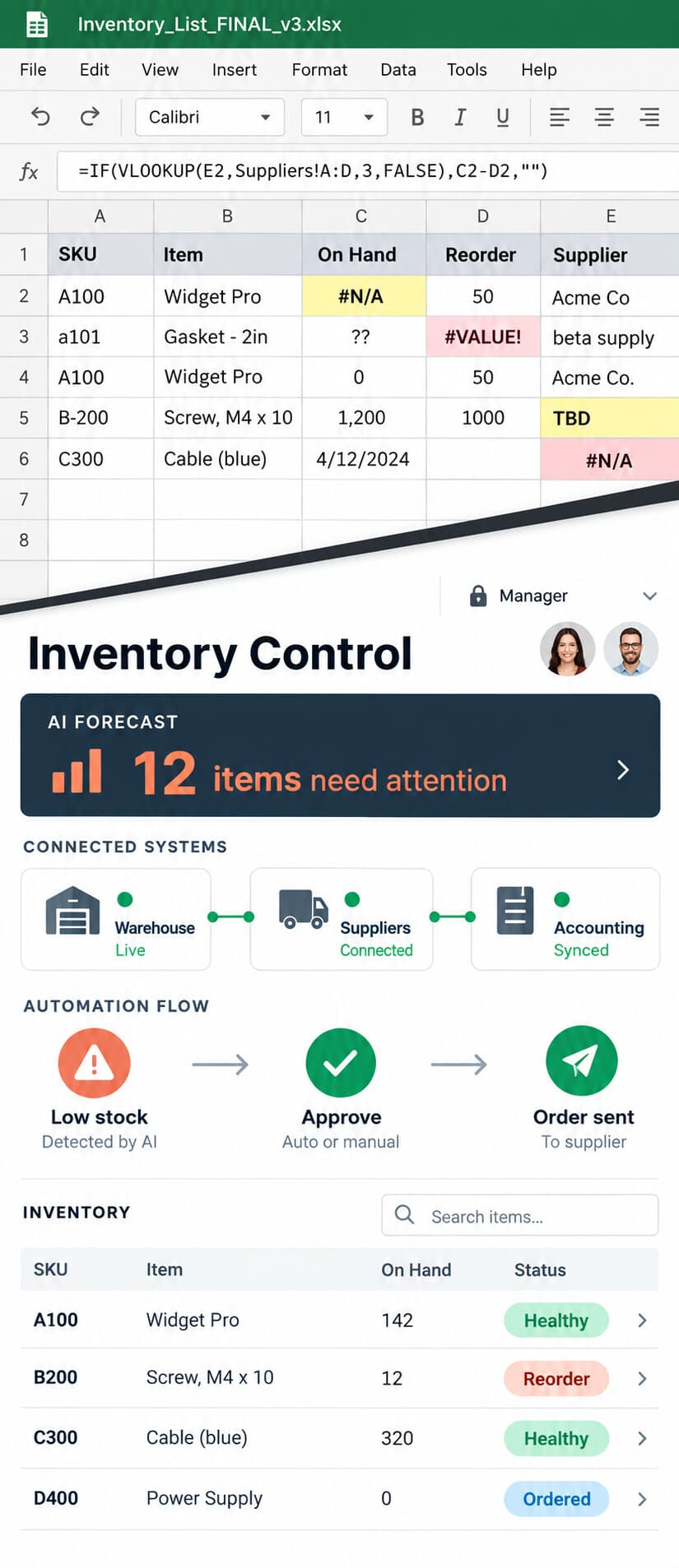
GlideApps Agency builds production-ready Transport Scheduling apps for enterprises and growth-stage companies — 350+ Glide apps delivered since 2019, with deep expertise in logistics & transportation. Projects start at $15,000 with typical delivery in 4–8 weeks.
What does building a Transport Scheduling app include?
Every engagement includes discovery, data architecture, UI/UX design, development, QA, and post-launch support — not just a build-and-handoff.
Discovery & Architecture
Requirements mapping, data modeling, integration planning, and platform-fit assessment before a single screen is built.
UI/UX Design
Wireframes and interactive prototypes designed for your users — not generic templates. Optimized for mobile and desktop.
Development & QA
Built by certified Glide experts with enterprise experience. Rigorous testing across devices, roles, and data volumes.
Launch & Support
User training, documentation, and ongoing maintenance. We don't disappear after deployment.
Key features of your Transport Scheduling app
Load-to-Carrier Assignment
Match shipment requirements (equipment type, capacity, lane, service level) to available carrier capacity. Assign loads with rate confirmation and pickup instructions in one workflow.
Driver & Equipment Scheduling
Schedule driver and equipment availability by shift, region, and run type. Get alerts when scheduling conflicts occur before dispatch — not after the driver is already en route.
Departure & Arrival Compliance Tracking
Track planned vs. actual departure and arrival times for every transport. Identify carriers and lanes with chronic schedule compliance issues for contract management.
Appointment & Dock Scheduling
Schedule shipping and receiving dock appointments. Carriers and drivers book dock slots through the app — reducing dock congestion and improving facility throughput.
Who uses a Transport Scheduling app?
How much does a Transport Scheduling app cost?
Projects start at $15,000 for internal business apps. Most clients invest $40,000–$80,000 annually across development, iteration, and support.
| Project Type | Timeline | Starting At |
|---|---|---|
| Internal Business App | 4–6 weeks | $15,000 |
| Client-Facing Portal | 4–6 weeks | $20,000 |
| Enterprise Platform | 6–8 weeks | $40,000 |
| Multi-App Architecture | 8–12 weeks | $50,000+ |
The Glide Sprint Process
How we build your Transport Scheduling app
Discovery
Requirements, data modeling, and platform-fit assessment. We define scope before writing a line of logic.
Architecture
Data structure, security model, integration map, and user roles. The blueprint that prevents rework.
Build
Iterative development with weekly demos. You see progress, not just status updates.
QA & Launch
Cross-device testing, user acceptance, and production deployment with rollback safety.
Support
Ongoing maintenance, feature iterations, and scaling support. We don't disappear after launch.
Frequently asked questions about Transport Scheduling apps
Can the app handle dedicated and spot carrier scheduling?+
Can carriers self-schedule their appointments through the app?+
How does the app handle driver HOS constraints during scheduling?+
Can the app manage cross-dock operations scheduling?+
Does the app integrate with our TMS?+
Related apps you might need
Logistics Management App
Logistics & Transportation
Fleet Management App
Logistics & Transportation
Driver Management App
Logistics & Transportation
Trucking Management App
Logistics & Transportation
Freight Management App
Logistics & Transportation
Explore all our Logistics & Transportation apps built with Glide.
“They are one of the few experts in Glide.”
Paola Quiles — CEO, Balanceada
Ready to build your Transport Scheduling app?
Schedule a consultation with our Senior Partners. We'll scope your project, recommend the right approach, and deliver in 4–8 weeks.